

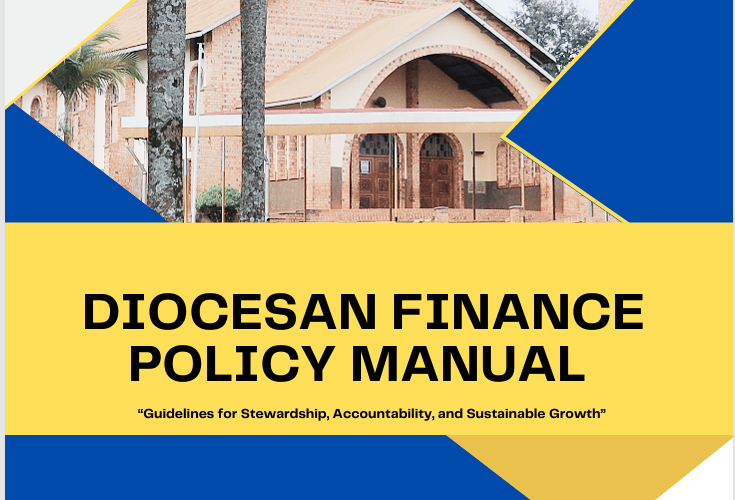
Launch of the First Diocesan Financial Policy Manual
|
Start:
December 19, 2025 10:10 am End:
December 19, 2025 3:00 pm Location:
St Nicholas Price:
Zero/= |
Why This Manual Matters: Stewardship as a Calling
The implementation of the Diocesan Financial Policy Manual is not merely an administrative requirement. It is:
-
Spiritual work — because it honors God through faithful stewardship
-
Pastoral work — because it safeguards resources meant for evangelization and service
-
A moral responsibility — because the Church must remain trustworthy, transparent, and accountable
The Church survives on trust:
-
the trust of the faithful who give sacrificially,
-
the trust of partners and benefactors who support our mission,
-
the trust of society that looks to the Church as a moral authority.
The financial resources entrusted to us do not belong to individuals.
They belong to the Church.
They belong to God’s mission.
When Church resources are well managed, the Gospel is proclaimed more effectively. When they are mismanaged, scandal weakens our witness.
The Product
What the Manual Contains:
The Financial Policy Manual is structured into thirteen major policy sections, supported by appendices, to provide a comprehensive framework for diocesan financial governance.
It begins with the Background of the Diocese, outlining vision, mission, pastoral data, education, vocations, and the importance of data-driven planning. It then presents a Financial Policy Overview, clarifying governance structures, policy mandate, and the role of the Diocesan Finance Council.
The manual sets clear standards for Budgeting, Resource Mobilization, Revenue Management, and Expenditure Control, ensuring discipline, transparency, and accountability. It addresses Human Resources, Payroll, and Taxation, recognizing the dignity and obligations of both clergy and lay workers. It provides guidance on EFRIS compliance, Debt Management, and Asset Control, safeguarding Church property for present and future generations.
Strong emphasis is placed on Financial Reporting, Audits, and Internal Controls, supported by appendices that include Canon references, templates, procurement guidelines, and standard forms. Together, these sections form one coherent system of accountability, applied consistently across all diocesan entities.
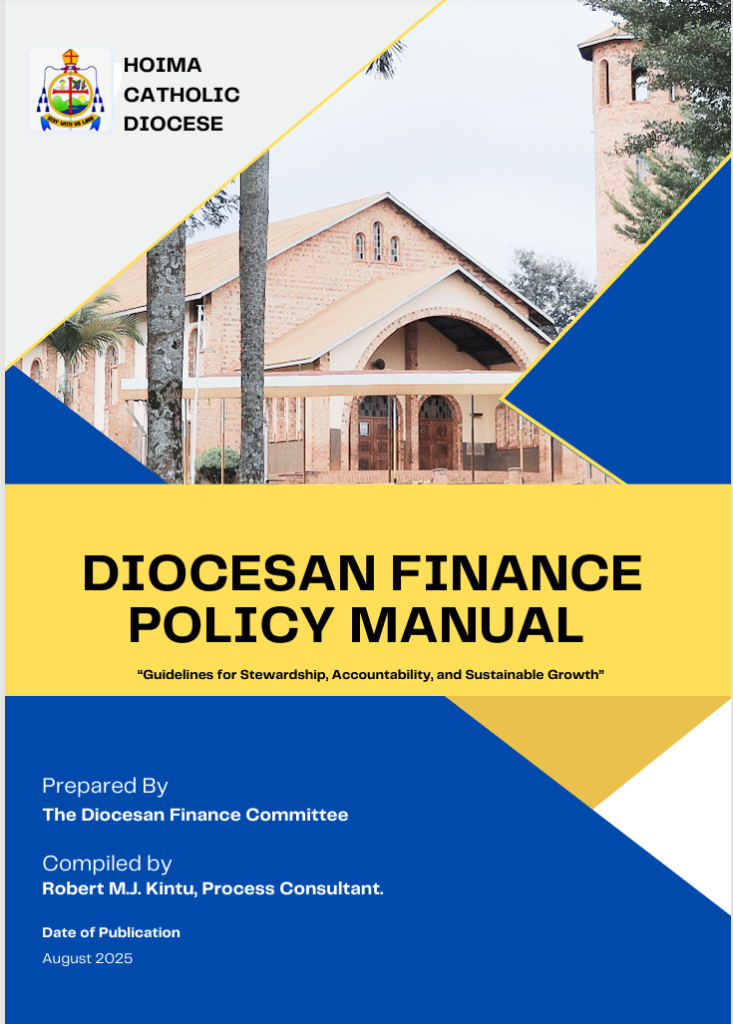
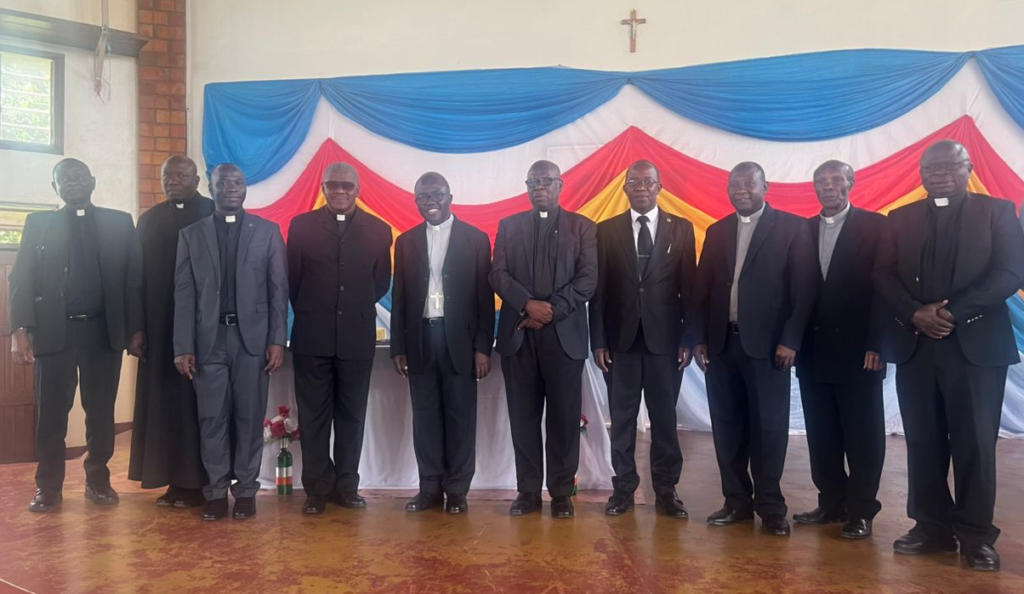
The true value of this manual lies not in its pages, but in its faithful implementation. Implementing the policy requires a conversion of mindset, not merely technical compliance.
Each leader is called to read the sections relevant to their role, apply them consistently in daily decisions, teach them to staff and parish teams, report honestly and on time, and protect Church assets as sacred trusts.
Good stewardship strengthens evangelization, protects the vulnerable, sustains institutions, and prepares the Diocese for future generations. It is an expression of leadership rooted in faith, integrity, and service.
Luke 16:10
Alignment with Church and Civil Authority
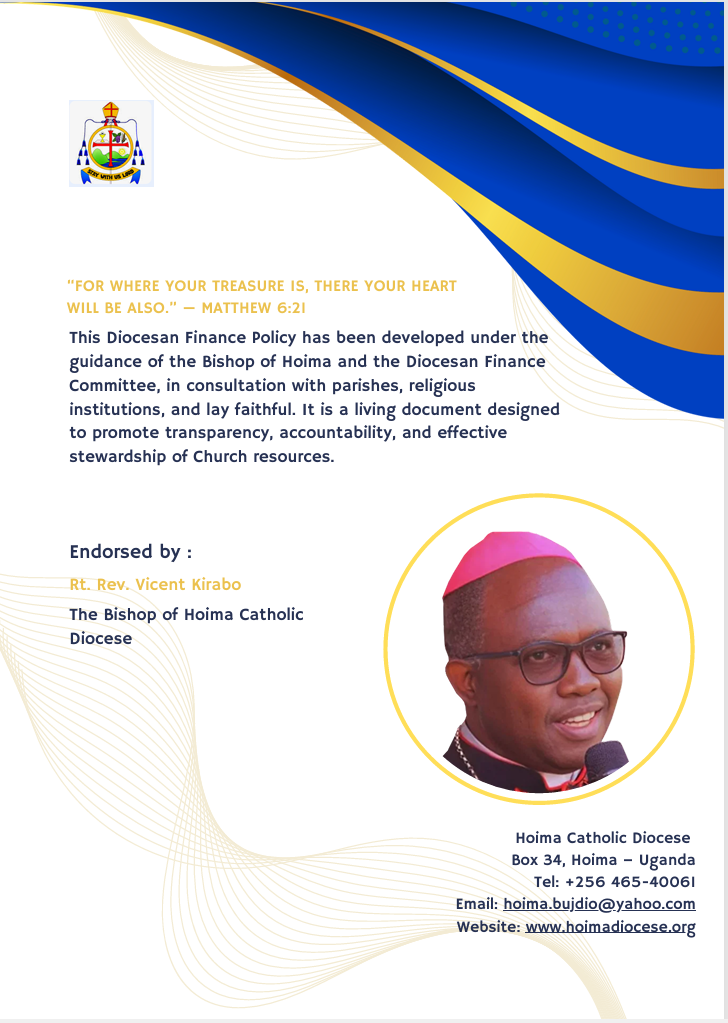
The Financial Policy Manual is firmly grounded in both Church teaching and civil responsibility. It must be applied in harmony with the Code of Canon Law, which prevails in all matters concerning the temporal goods of the Church. At the same time, it aligns with national accounting standards, statutory regulations of Uganda, and professional accounting and audit guidelines.
The manual is deliberately designed as a living document. It will be reviewed and updated every three to five years to respond to evolving pastoral, legal, technological, and operational realities. This ensures that the Diocese remains faithful to Church teaching while responsive to changing contexts.
FAQ
1. Why is financial management considered spiritual work?
Because Church resources belong to God’s mission, not to individuals. Managing them faithfully honors God, strengthens evangelization, and protects the trust of the faithful.
2. How is the policy pastoral in nature?
Good financial planning ensures that parishes, schools, hospitals, and ministries have what they need to serve God’s people effectively — especially the poor and vulnerable.
3. Why is financial stewardship a moral responsibility?
The Church survives on trust. Transparent management prevents misuse, scandal, and injustice, ensuring donations and resources are used exactly for the purposes intended.
4. Who is required to use the Diocesan Financial Policy Manual?
All diocesan entities, including:
• parishes and chaplaincies
• schools and health facilities
• commissions and departments
• projects and institutions
• clergy, religious, and lay administrators
Everyone who handles Church funds has a duty to comply.
7. How does the policy support fund mobilisation?
It builds donor and partner confidence through transparency, reliable reporting, and data-driven planning — making projects credible and sustainable.
8. How often will the manual be updated?
Every 3–5 years, or sooner if pastoral, financial, or legal needs change.
9. What role do parish councils and lay committees play?
They support budgeting, monitoring, reporting, and accountability — ensuring decisions are transparent and consistent with diocesan guidelines.
10. How does this policy protect Church assets?
It establishes clear controls for land, buildings, equipment, digital systems, and finances — reducing loss, duplication, misuse, or disputes.
11. What is expected of every leader?
To model integrity, apply the policy consistently, teach their teams, report honestly, and protect Church resources as sacred trust.
If you would like a similar service ?
In 2 to 3 months you will have a finished product that tailored to your diocese.
© 2026 All Rights Reserved.

